
The Useless Shall Inherit the Earth
On Facts, Fancies, Trivia and its Trivialities (with voiceover!)

Ah, the blank page, my greatest enemy. The tiny non-invasive thing that is so intimidating that there was a pretty depressing soap opera based on it in the 90s. Cue Kora Kaagaz title song.
But this post is, surprisingly, not about how I am unable to write.
It is about cold, hard facts and warm, soft facts. Facts, in general.

A couple of months ago, I’d seen this reel by Krish Ashok (@masalalab) where he had described the origins of a few words in common use, like how ghee and Christ are derived from the same root. I, being an etymology hound, was frothing at each nugget of info being dumped. And then I made the mistake of checking the comments, most of which were in the vein of “Proto-Indo European is a lie” and “hence proving the Aryan Invasion theory.”
Aside from the egregiously stupid radicalization of the average Indian internet commenter, what miffed me the most were comments like “What use is this information?”
Use? USE!?

Uhm, I’m calm, I’m calm. Breathe in. Breathe out. Okay.
But it does (mildly) infuriate me when I see all learning treated merely as an aide to climbing higher on the societal ladder; as if it can only be used to gain power, leverage, status. Another notch in our effort to crab our way out of the bucket. Anything outside of that is to be discarded as useless.
I know most Indians are struggling to fill the lowest rungs in Maslow’s (wildly inaccurate) pyramid, but if you have access to a smartphone and internet, then maybe it can be assumed that you are not wanting for food. Then again, I’ve seen beggars on the streets accepting UPI, so anything is possible in this weird hodgepodge we call a country.
Of course, information has direct utility, especially the ones you learn during vocational courses, but all that engineering has ever taught was how to GT someone else’s drawing and to only eat Chinese food in stalls where all plastic (chairs, tables, plates, chef) is red.
And the sad thing is, I’m not an exception. There are millions like me who graduated with a degree but no angles to turn to.
So if even directional knowledge, one that says “you study this and you’ll get this”, is not working as expected, maybe, just maybe, aren’t we better off chasing useless information that catches our fancy?
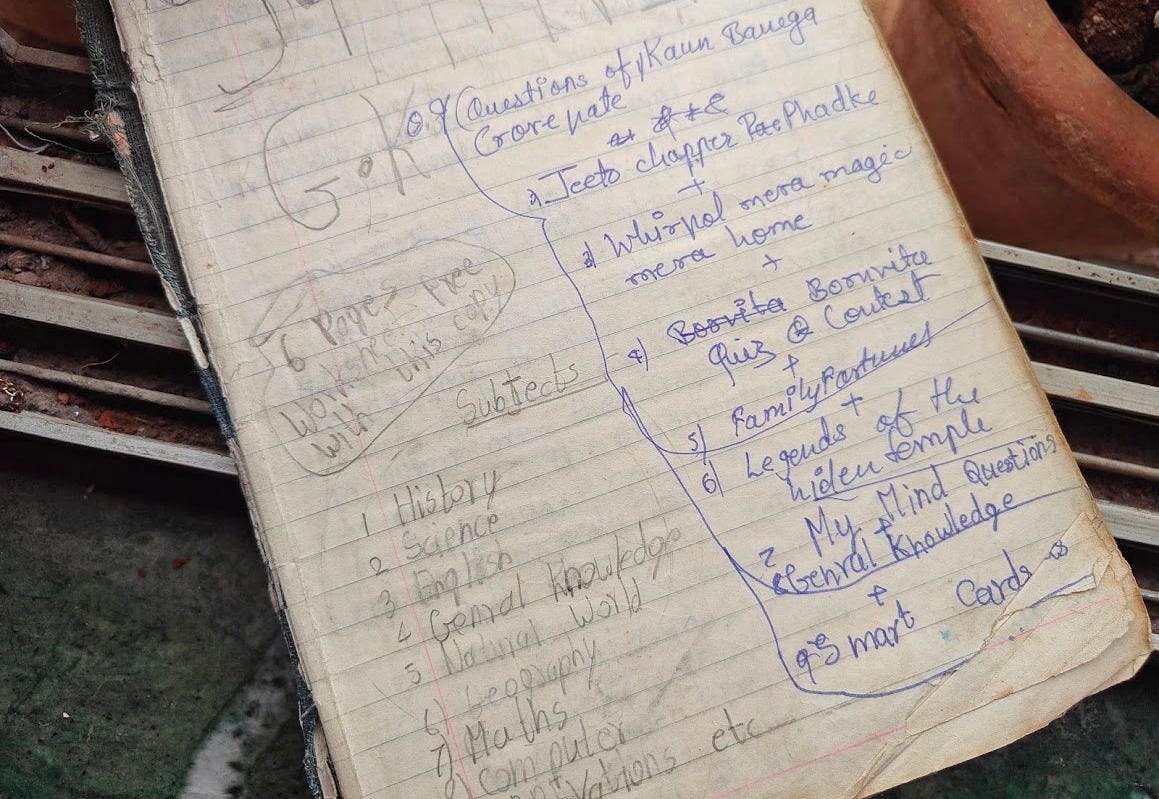
I’ve been a fiend for facts for far longer than I can remember. I still have maintained lists of all the Qs and As painstakingly written by an 8-year-old hand while watching KBC and Bournvita Quiz Contest– even snippets thrown around in Legends of the Hidden Temple that I considered gospel. Anyone who knew stuff offhandedly was my hero. Derek O’Brien was my god.
It is not all virtuous, of course. I’ve always been terrified of not knowing the answer. Trying to find and search and hound instead of a simple “I don’t know”. Maybe I still want to maintain the perception of the smart kid who knew shit. In all my school slam books, classmates had written only two qualities about me: Studious and Fat. Nothing cuts deeper than a teenager being blunt.
But turns out they weren’t totally wrong– I was studious, fat and hoarded factoids like they were going out of stock.

Let’s reserve my trauma for an expensive therapy session. For now, in pursuit of my quest to justify this particular topic, I did some research on it.
I did!
I swear!
Well, I read one book: The Usefulness of Useless Knowledge by Abraham Flexner.
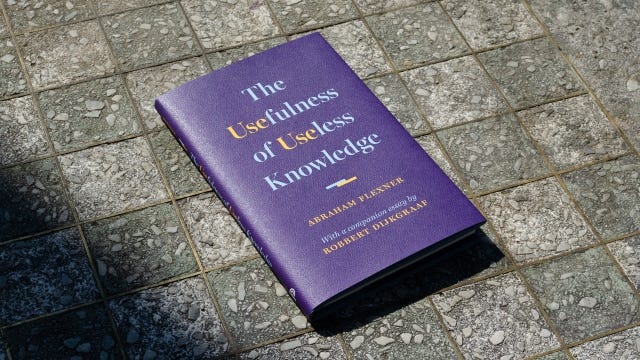
Abraham Flexner (1866–1959) was an American educator best known for reforming medical education, and later, as founding director of the Institute for Advanced Study at Princeton, he championed curiosity-driven research.
To quote another essay in the same book, here is how Robert Dijkgraaf describes Flexner’s thinking:
He believed that only with the benefit of hindsight could the long arcs of knowledge be discerned, often starting with unfettered inquiry and ending in practical applications.
A man after my own heart.
There are numerous examples in history where, if you simply let curiosity be and allow knowledge to accumulate, over time, it ultimately benefits humanity. Fields that started off purely theoretical and speculative (ike Hertz playing with invisible waves he thought were useless) ended up changing the course of history a hundred years down the line. Even Steve Jobs, nerd Jesus himself (hat tip to Bill Burr), has said that you can only connect the dots looking backwards.
In college, I frittered my time away playing a pirated FIFA 09 (I wonder why I was directionless after graduation) and every year, I would update the teams using this modding software called Creation Master 09. To take the obsession to the next level, I wanted to update how the players looked just because Zlatan Ibrahimovic had gone from looking like a chocolate boy to a stone-faced assassin. And I wanted to be consistent.

So I learned Photoshop to do so. This led me to renew my interests in both Photography and Web Design, the latter of which has somehow stumbled into becoming my career at this point.
But Flexner also argues against curiosities needing an end goal. The fact that they find utility must be treated as a by-product; a culmination of cumulative knowledge, most of which were driven by asking questions that were deemed pointless at the time.
I am not for a moment suggesting that everything that goes on in laboratories will ultimately turn to some unexpected practical use or that an ultimate practical use is its actual justification. Much more am I pleading for the abolition of the word “use,” and for the freeing of the human spirit. To be sure, we shall thus free some harmless cranks. To be sure, we shall thus waste some precious dollars. But what is infinitely more important is that we shall be striking the shackles off the human mind and setting it free for the adventures.
- Abraham Flexner
The utility of (currently) useless information is questioned time and again. Rampant funding cuts to educational and research institutions by tangerine dictators are only going to harm the future generation of innovators.
We’re trading short-term savings for long-term stagnation. Curiosity cannot be grown on command; once you starve it out, it doesn’t magically reappear when you suddenly need a cure, a chip, or a telescope.
The real enemy of the human race is not the fearless and irresponsible thinker, be he right or wrong. The real enemy is the man who tries to mold the human spirit so that it will not dare to spread its wings
- Abraham Flexner (What a badass!)
So what can we do about it? Perhaps we can start by acknowledging that curiosity is undeniably a human characteristic (often misattributed to cats) and try not to put down someone who is going down rabbit holes of their interests.
Now go gather some warm, soft facts as if they’re going out of stock.
Go chase your own fancy. Go!

Sidequest: Shettymology
As if the whole diatribe above wasn’t enough, let me make it abundantly clear: I ❤️ Etymology! I mean, the mere fact that just looking at a word’s origin can weave a whole tapestry of history, wars, politics and culture, should be enough to blow your freaking minds. To that effect, I’ve of course gone and built a website for it.
Presenting: shettymology.com
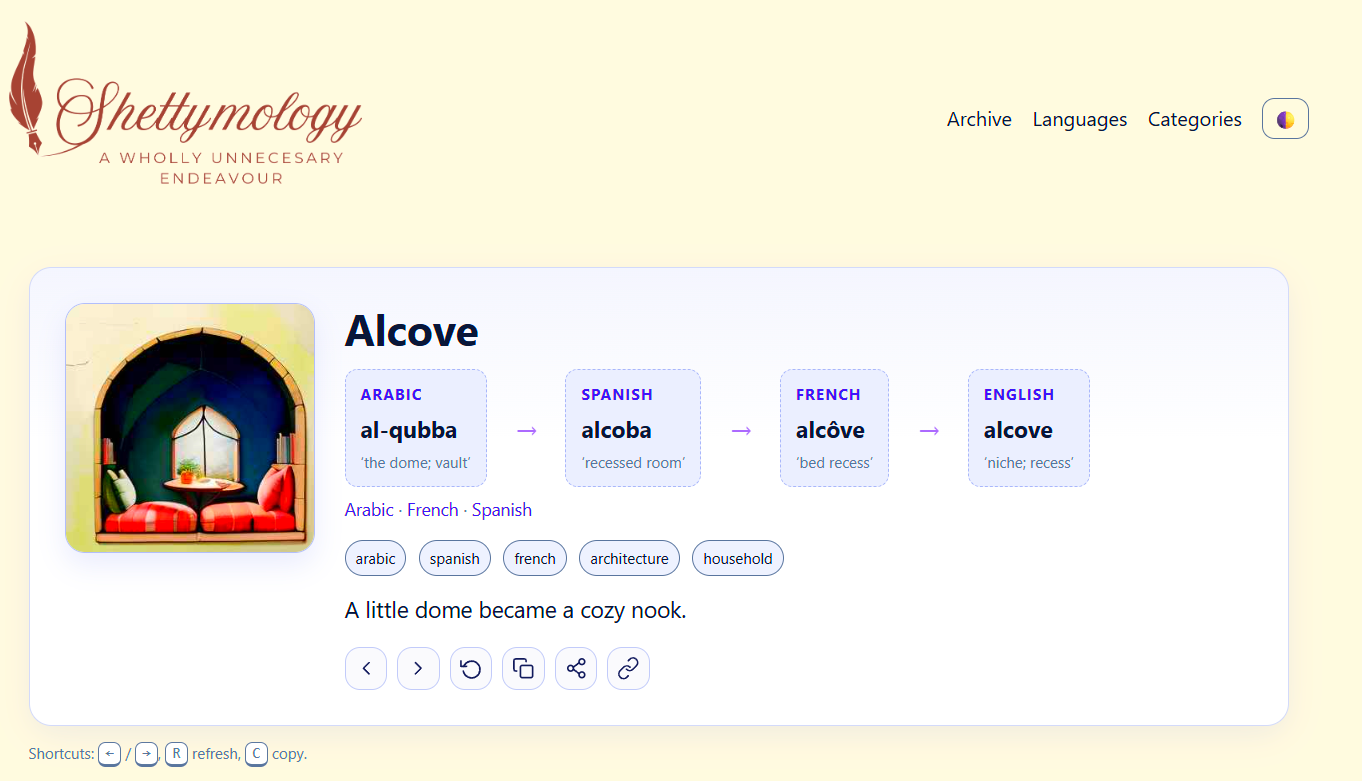
My forefathers carried this surname on their backs throughout history, and for it to end up as a pun in the worst/best way possible is the ultimate tribute I can give them.
Go in, browse around. See if anything lights up those synapses.
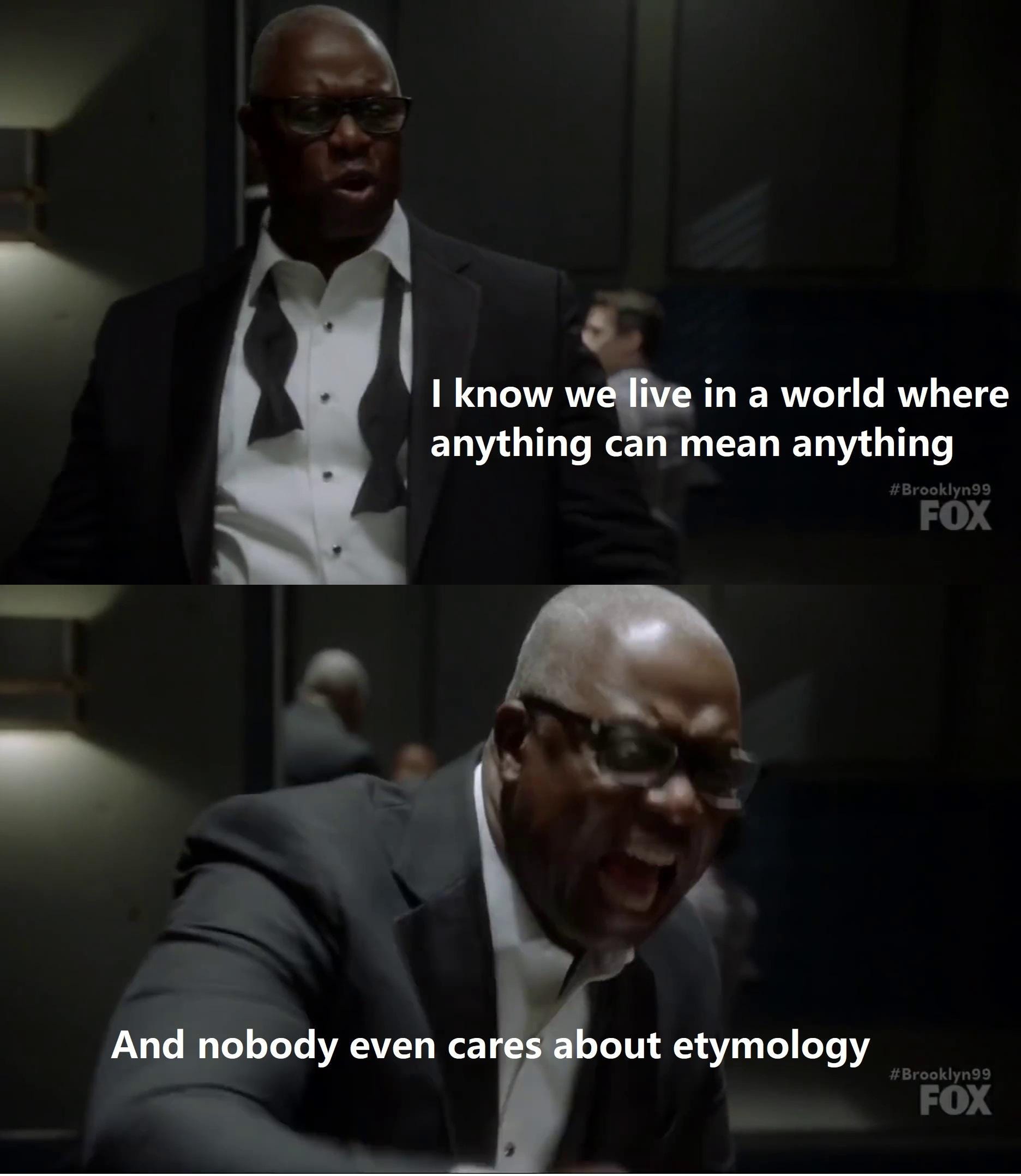
That’s about it. There’s a lot more on this topic that I can talk about. I’ll save my love for quizzes for another post, especially those where the questions are so wonderfully worded that the answer is deducible if you just think laterally.
See ya next week/month!
Nothing but just inspired by factoids
Loved the piece and the voice over