
Apply Ass to Chair
On Writing Through Writer's Block by Pretending You’re Not Writing

I’ve got nothing for you this week. Zilch. Nada.
On days like these, I go over my older posts thinking, “Who the hell was this guy that spewed so many words on the page? 13 posts? And only some of them mentioned farts? Seriously, who is this guy?”
Same reaction I have (sans farts) when I go through my back catalogue of other pennings: poems, short stories and the novel I’m supposedly writing. It's an otherworldly experience when you're writing and in the zone, versus looking back and going through your previous work.
Your head swings between these two states constantly:
a) in disgust at the clearly insane mind that wrote this,
b) in awe of the veritable genius who wrote that.
It is better said in Hindi, where both states are “क्या लिखा है यार!” with meaning shaped by varied emphasis. Both states are happening to me right now as I read the above paragraph.
And with this shaky intro, I welcome you to yet another edition of “I don’t know what to write about this week, so I’ll write about how I don’t know what to write about this week”.
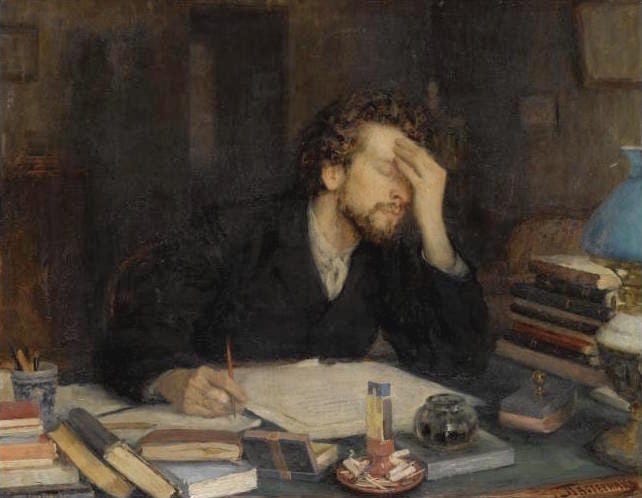
This trick of being meta or self-reflective about the writing as it's being written is something I’ve learned to do whenever I face writer’s block. It is something I am supposedly good at, but it is also a crutch. It feels like a fucking great magic trick when done right. You will be amazed at the trick even when the cards are see-through.
But if I don’t use it to eventually slingshot out of the spiral and go into actually what I want to write about, it gets very tiring. One ends up commentating on the commentary, eventually stuck in a hall of mirrors, trying not to look defeated, ad infinitum, a meta-Ouroboros – like the newer Rick & Morty episodes.
And then I am back to the starting line.
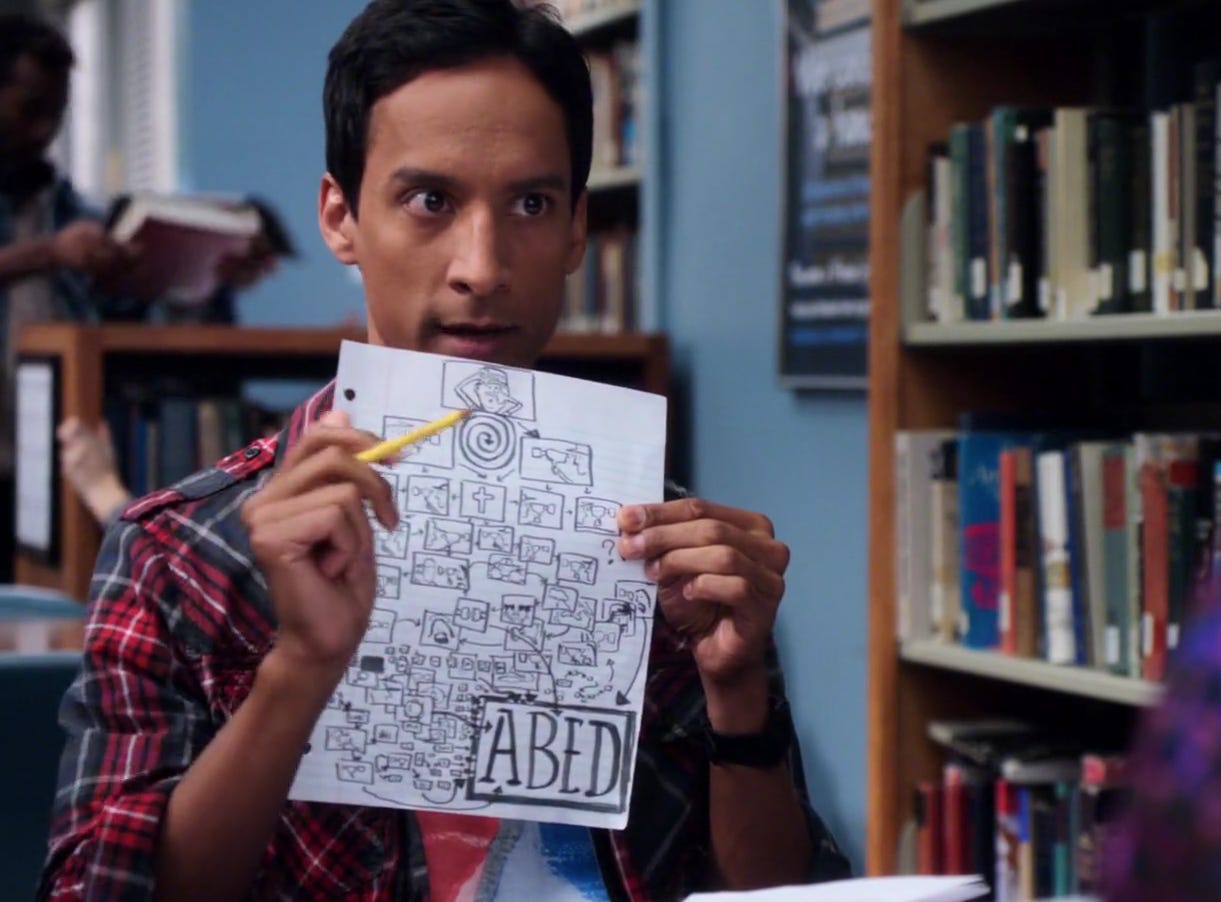
Post-modern metafiction feels like a natural evolution, to me at least, especially in a world where it seems everything worth saying has already been said (There is a point to be made about originality vs authenticity here, but move past it for now). So the question becomes: Why write at all? And I doubt anyone has a straightforward answer to that.
Which might explain why the very act of writing so often feels terrible in the first place. Perhaps that’s where you get quotes like these:
(By the way, I see you, raising your hand from the last bench, asking if I’ll be using quotes to beef buff* up this article? Passing off other writers’ wisdom as my own?
Yes and No.
Yes, you are correct in assuming that I will be using hurriedly Googled quotes; No, you may not go to the toilet. Lower your pinkie finger, sit down and listen to me yap.)
*because I too live in 2 states: Denial and Maharashtra
“You simply sit down at the typewriter, open your veins, and bleed.” — Red Smith (dramebaaz!)
“I hate writing. I love having written.” — Dorothy Parker (hard agree)
“Writing a book is a horrible, exhausting struggle, like a long bout of some painful illness.” — George Orwell (Well, he was born in Bihar.)
(Observe the subtle classiness of this next one.)
“Writing is like pulling teeth. From my dick.” — David Rakoff
What are all these writers crying about, right? You have the talent and privilege of using your words to express yourself in a way that can connect with another human belonging to a different culture, geography and time– which is the ultimate proof that in the end we are all made up of the same mushy stardust, and you have the audacity to complain boohoo your brain-not-worky? Right? Wrong?
Well, like all things, the truth, perhaps, lies somewhere in the middle.
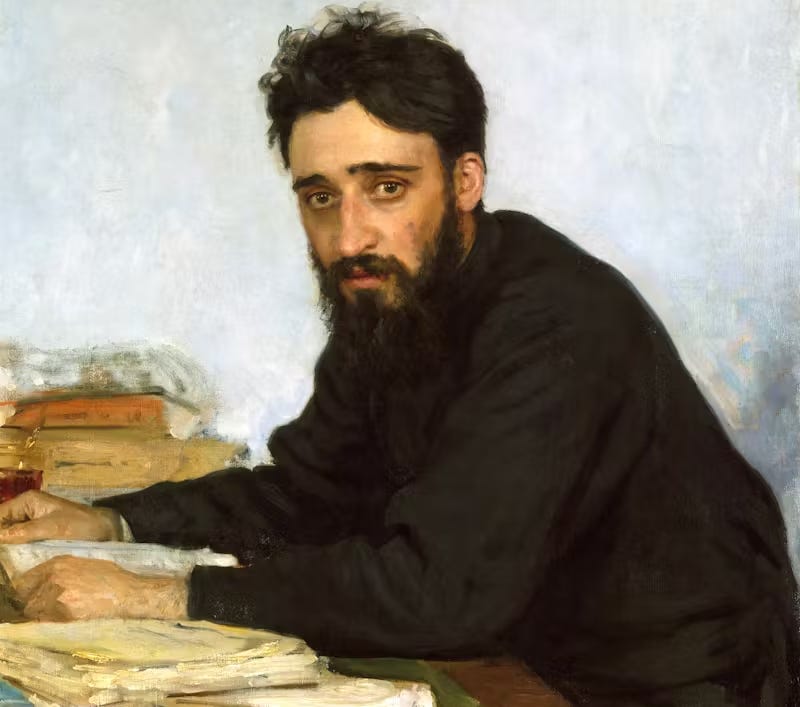
I’ve had this theory that writing feels painful for three reasons:
It is a relatively newer art form (~5,200 years), so it doesn’t feel as primal, as encoded in our DNA like oral storytelling, music, art, dance, or building something using our hands.
It’s the only art form with visible proof of being able to carry thoughts, stories, and ideas across centuries, with unnerving degrees of fidelity.
It is a terribly lonely thing to do. I am to actively listen to my thoughts AND pen them down? Get outta here!
When you have the weight of permanence and validation, clubbed with a constant need for solitude, it gets trickier to “just do it.”
This is where, I think, the subtle trick you need to play on yourself comes in: forgetting the reader, and subsequently, foregoing the idea of legacy.
Often in our writers’ group, newer writers who are stuck are weighed down—often subconsciously—by grand ideas, with their minds swinging wildly between extremes like a pair of geriatric family jewels. That’s when some of us seasoned amateurs have to step in and remind them they’re on the right path; that self-doubt is just the first step in this marathon of constant self-discovery. But first, they need to quiet the shrieking sirens, rein in the horses, and try not to mix metaphors quite as much as I have done here.
I realize that I should come up with better solutions than just saying a version of “Apply Ass to Chair” (I’ve tried to in the next section), but almost all the writing advice I’ve read over the years boils down to ostensibly saying “Apply Ass to Chair”.
I tend to write best when there are constraints and challenges, especially time-bound ones, like during NaPoWriMo or NaNoWriMo. A few years ago, I used to write one story a week based on whatever prompt was given. When it comes to first drafts, quantity trumps quality. The goal is to get so much down on the page that, just by probability, some of it has to turn out good.
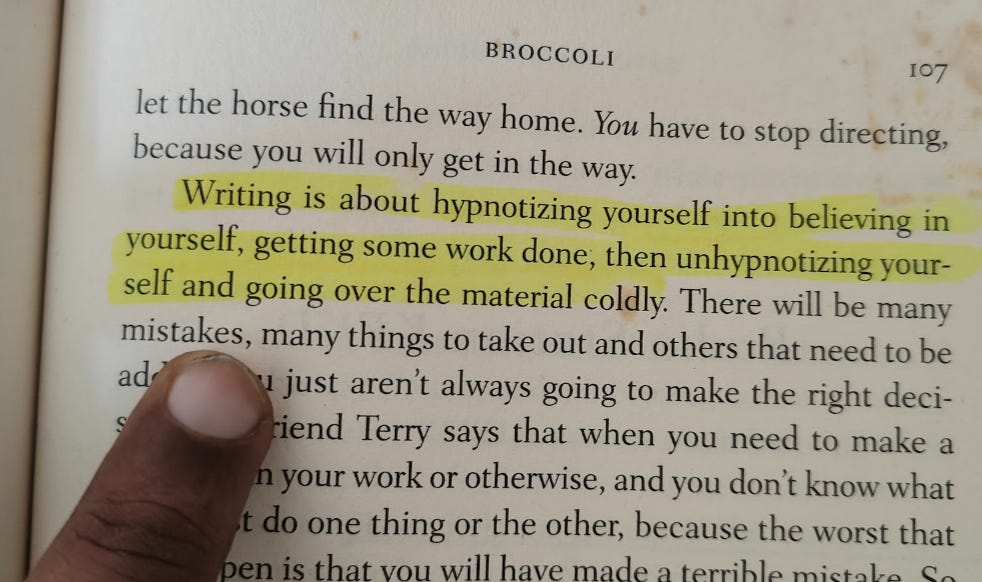
Different strokes for different folks. For me, Bird by Bird by Anne Lamott is my mental WD-40 whenever I do get stuck. There’s no instant fix, but flipping through a few pages helps ease my mind and lets me take it one step at a time, bird by bird. I recommend it to anyone feeling stuck, though I know it’s not a one-size-fits-all solution.
Funnily enough, I first discovered Anne Lamott through Tim Ferriss, who, just a few days ago, tweeted a piece of Rick Rubin advice about how he gets his artists out of a jam:
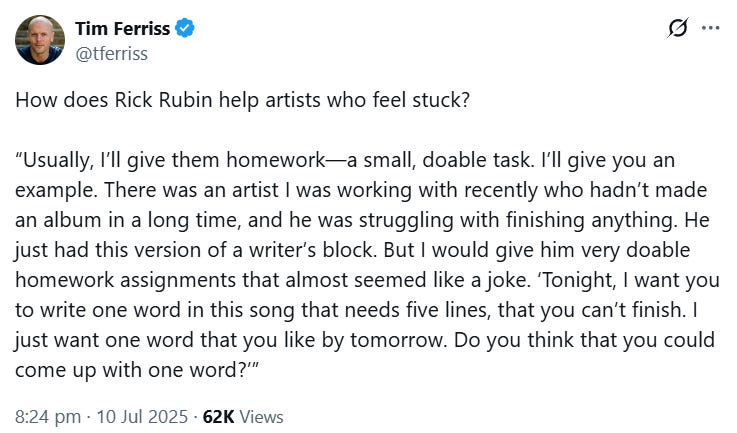
In sharing this, I think I just cited a quote from a book about taking it one step at a time by an author→ referred to by another author → who shared a quote by another artist → who helps his artists by saying take it one step at a time. I’m stuck in the hall of mirrors again! Send help!
Anyway, I sure as shit didn’t start this post to give advice—but maybe if I can acknowledge the problem and find reasons for why it feels so heavy, then I might help a future version of myself at least, if not others. Writer’s block may or may not be real, but no other creative block has its own Wikipedia article that traces this affliction back centuries. So we might as well live with the fact that we might get stuck from time to time because it comes with the territory.
From my eight years of experience around writers, I've come to realise that one thing they love to talk about is their inability to write.
And often that is, like the beginning of this post, not the whole truth. I did have something for you by the end, and I did exclaim क्या लिखा है यार! in both tones, multiple times.
So the next time I get stuck again (which, knowing me, will probably happen by lunch time today), remind me to apply ass to chair and just write.
Sidequests: Myriorama Cards!
Sticking with the topic at hand, I was rotting my brain the usual way (YouTube) when I came across a video by Austin McConnell, a channel that perfectly captures the kind of content I want to binge.
In this one, he talked about Myriorama, a 19th-century precursor to moving pictures on stage. Eventually, people turned it into card decks called Endless Landscapes that could be arranged in any order to create different panoramic scenes. People have used these things as creative prompts to get past writer's block, and I thought, perfect! I'll make a playable version of it online! So that's what I did.
Presenting: Myriorama Cards!

There are two decks in this, with 16 and 24 cards respectively. You can use the "Add Cards" button to randomly place cards, or pick from the deck and arrange them on the placemat yourself. You can change the number of slots, shuffle the layout, reset everything, and that's about it. The possibilities aren’t technically endless, but a 20-card deck can yield around 2.5 million combinations, so it might as well be.
Play around with it, but not too much. Try writing something based on the scene you see, and maybe that’ll help catapult you out of the funk.
Reccs
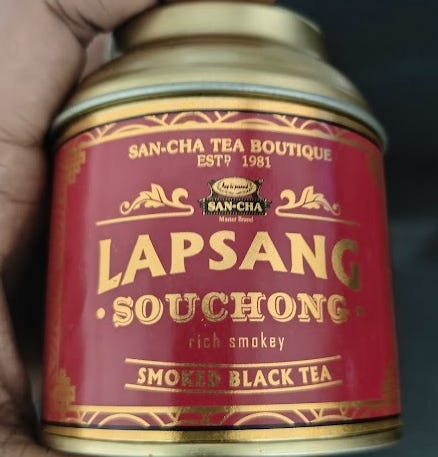
I just have a tea recommendation for you this week: Lapsang Souchong
It has a nice smoky taste that reminds me of my grandmother cooking over the firewood stove in our ancestral home. Now there is no stove, no kitchen, no house and no grandmother. The taste that lingers on my tongue is of an expensive ass Chinese tea, made in India, that I paid a bald billionaire to get to my doorstep. At least, it tastes amazeballs.
And that’s about it.
I don’t know why we write, but there is a compulsion borne out of something primal which I can’t seem to put my finger on. This whole sentence negates my previous argument of why I thought writing is difficult, but that’s okay. I have very strong convictions loosely held together, and I flip-flop in the face of new evidence, which leaves me constantly amazed, dazed and confused. I need to drink some of that tea now.
Good stuff. Couldn't shake the feeling that I had read an earlier draft. So be it. Love the cards.
Kya likha hai yaar! (😍 Ye waala)